
Creating a disaster recovery plan is an important step toward protecting your business. However, a disaster recovery plan that sits untouched on a shelf may provide little value when an actual emergency occurs.
The reality is simple: a disaster recovery plan is only as effective as its most recent test.
Organizations frequently invest time and resources into disaster recovery planning but fail to verify whether their recovery procedures actually work. When outages, cyberattacks, or infrastructure failures occur, untested assumptions can quickly lead to extended downtime and costly disruptions.
This is why disaster recovery testing is a critical component of every business continuity strategy.
In this guide, we’ll explain why disaster recovery testing matters, how often plans should be tested, the different types of testing available, and the best practices organizations should follow.
Why Disaster Recovery Testing Matters
A disaster recovery plan is essentially a set of documented assumptions.
Testing verifies whether those assumptions are correct.
Without testing, organizations may discover problems only when a real disaster occurs.
Technology Changes Constantly
IT environments rarely remain static.
Over time, organizations add:
- New applications
- Additional servers
- Cloud services
- Network infrastructure
- Security controls
A recovery plan that worked two years ago may no longer reflect the current environment.
Organizations that maintain a dedicated disaster recovery site should ensure recovery procedures evolve alongside infrastructure changes.
Personnel Changes Occur
Employees leave, responsibilities shift, and organizational structures evolve.
Testing helps ensure team members understand:
- Recovery procedures
- Escalation paths
- Communication processes
- Operational responsibilities
Hidden Weaknesses Are Revealed
Testing often uncovers issues such as:
- Missing documentation
- Outdated contact information
- Replication failures
- Backup problems
- Connectivity issues
Identifying these gaps before an actual emergency significantly improves recovery readiness.
Recovery Objectives Must Be Validated
Organizations typically establish goals for:
- Recovery Time Objective (RTO)
- Recovery Point Objective (RPO)
Testing confirms whether those objectives can realistically be achieved.
How Often Should Disaster Recovery Plans Be Tested?
There is no universal answer that applies to every organization.
Testing frequency depends on:
- Industry requirements
- Infrastructure complexity
- Compliance obligations
- Business risk tolerance
- Rate of technology change
However, there are general guidelines that most organizations can follow.
At Least Once Per Year
At a minimum, disaster recovery plans should be tested annually.
Annual testing helps validate:
- Recovery procedures
- Team readiness
- Infrastructure functionality
For many organizations, this represents the baseline standard.
Semi-Annual Testing
Businesses with more critical workloads often conduct testing every six months.
This approach is common among organizations that:
- Depend heavily on technology
- Support customer-facing applications
- Maintain strict uptime requirements
Quarterly Testing
Organizations in highly regulated or mission-critical industries may test quarterly.
Examples include:
- Healthcare providers
- Financial institutions
- SaaS companies
- Large enterprises
Frequent testing helps ensure recovery capabilities remain aligned with operational demands.
After Significant Infrastructure Changes
Testing should also occur whenever major changes are made, such as:
- Data center migrations
- Network redesigns
- New cloud deployments
- Application upgrades
- Infrastructure expansions
Waiting until the next scheduled test may leave critical vulnerabilities undiscovered.
Organizations using cloud computing environments or expanding their data center solutions should always validate recovery capabilities after major deployments.
Regulatory and Compliance Considerations
Many industries require organizations to demonstrate disaster recovery readiness.
Testing is often a key component of these requirements.
Healthcare Organizations
Healthcare providers must ensure that critical systems supporting patient care can be recovered effectively.
Regular testing helps validate continuity procedures and operational resilience.
Financial Services
Financial institutions often face strict expectations regarding:
- Operational continuity
- Recovery capabilities
- System availability
Testing may be reviewed during audits and regulatory assessments.
Enterprise and Manufacturing Environments
Many organizations maintain internal governance standards requiring periodic testing to reduce operational risk.
Cyber Insurance Requirements
Increasingly, cyber insurance providers evaluate disaster recovery capabilities when assessing risk.
Documented testing may help support insurance applications and claims processes.
Types of Disaster Recovery Tests
Not all disaster recovery testing involves shutting down systems or simulating full-scale disasters.
Organizations can choose from several testing approaches.
1. Documentation Review
This is the most basic form of testing.
Teams review:
- Recovery procedures
- Contact lists
- Escalation paths
- Recovery documentation
The goal is to identify outdated information and administrative gaps.
Benefits
- Low cost
- Easy to perform
- Improves documentation quality
Limitations
- Does not validate actual recovery capabilities
2. Tabletop Exercises
A tabletop exercise walks participants through a hypothetical disaster scenario.
Teams discuss:
- Response procedures
- Recovery actions
- Communication plans
These exercises help validate decision-making processes and team coordination.
Benefits
- Identifies procedural weaknesses
- Improves team readiness
Limitations
- Does not test actual infrastructure
3. Simulation Testing
Simulation testing introduces realistic failure scenarios without disrupting production systems.
Examples include:
- Server failures
- Connectivity interruptions
- Security incidents
Teams practice recovery procedures in a controlled environment.
Benefits
- More realistic than tabletop exercises
- Validates operational processes
4. Partial Recovery Testing
Organizations recover selected systems or applications to verify specific recovery procedures.
This may include:
- Data restoration
- Application recovery
- Network failover testing
Benefits
- Tests actual infrastructure
- Minimizes operational disruption
5. Full Disaster Recovery Testing
This is the most comprehensive testing method.
Organizations simulate a complete outage and recover operations using disaster recovery infrastructure.
Examples may include:
- Activating a disaster recovery site
- Failing over to secondary systems
- Running workloads from backup environments
Benefits
- Provides the highest level of validation
- Tests people, processes, and technology
Considerations
- Requires significant planning
- May involve operational risk
- Often conducted less frequently
Common Disaster Recovery Testing Failures
Many organizations conduct testing but fail to gain meaningful value from the process.
Common mistakes include:
Testing Too Infrequently
Recovery capabilities can degrade quickly as environments change.
Focusing Only on Documentation
A written plan does not guarantee successful recovery.
Actual infrastructure should be tested whenever possible.
Failing to Test Connectivity
Recovery depends on more than servers and backups.
Organizations should verify:
- Network connectivity
- Carrier redundancy
- Remote access capabilities
Not Measuring Results
Recovery testing should evaluate:
- Recovery time
- Recovery accuracy
- Process effectiveness
Without metrics, improvement becomes difficult.
Ignoring Lessons Learned
Testing should result in updates to:
- Procedures
- Documentation
- Infrastructure configurations
Failing to act on findings reduces the value of future tests.
Many of these issues are among the most common disaster recovery mistakes organizations make.
Disaster Recovery Testing Best Practices
Organizations can maximize the value of testing by following several key practices.
Create a Testing Schedule
Testing should be planned and documented rather than performed reactively.
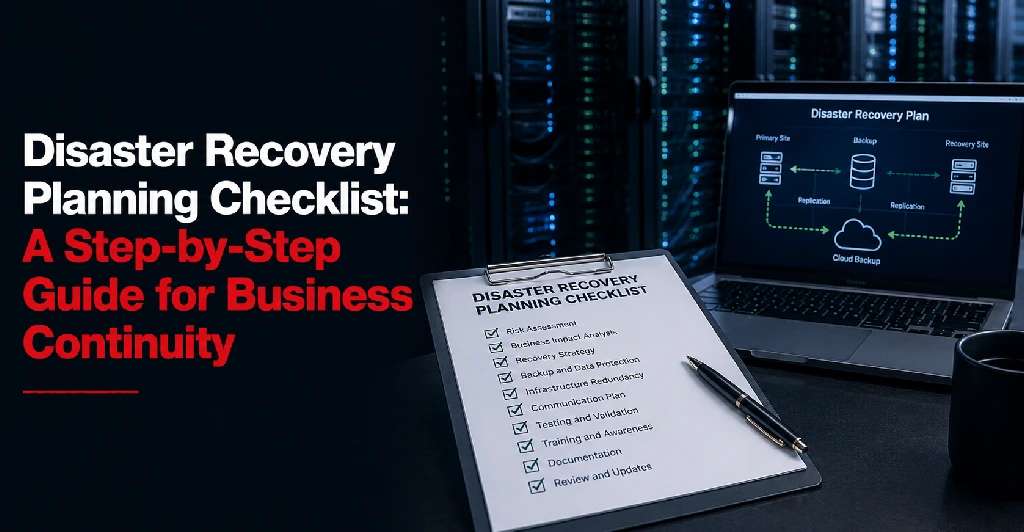
A structured disaster recovery planning checklist can help ensure testing activities remain consistent and repeatable.
Test More Than Technology
Recovery involves:
- People
- Processes
- Infrastructure
- Communication
Each component should be evaluated.
Validate Recovery Objectives
Measure whether:
- Recovery Time Objectives (RTOs) are achieved
- Recovery Point Objectives (RPOs) are met
Testing should confirm business requirements can be satisfied.
Include Multiple Teams
Recovery often requires collaboration across:
- IT departments
- Operations teams
- Management
- Vendors
Cross-functional participation improves preparedness.
Document Every Test
Maintain records of:
- Test objectives
- Results
- Issues discovered
- Corrective actions
Documentation supports both operational improvement and compliance requirements.
Continuously Improve
Each test should strengthen the recovery plan.
Organizations should treat disaster recovery as an ongoing process rather than a one-time project.
It’s also important to understand that disaster recovery and backup are not the same thing. Effective testing should validate complete recovery capabilities, not just backup availability.
Questions to Ask About Disaster Recovery Testing
When evaluating your recovery strategy or a disaster recovery provider, consider asking:
- How often are recovery procedures tested?
- Can failover environments be tested without disruption?
- Are recovery objectives measured during tests?
- What reporting is provided after testing?
- How are lessons learned incorporated into future planning?
- Can testing support compliance requirements?
The answers can provide valuable insight into overall recovery readiness.
Organizations evaluating third-party disaster recovery services should ensure testing capabilities are included as part of the solution.
Final Thoughts
A disaster recovery plan is only effective if it works when needed.
Regular disaster recovery testing helps organizations validate recovery procedures, identify weaknesses, confirm recovery objectives, and improve overall resilience.
While annual testing may be sufficient for some businesses, organizations with critical systems or strict compliance requirements often benefit from more frequent validation.
The most successful recovery strategies are not simply documented—they are tested, measured, refined, and continuously improved.
When disaster strikes, preparation matters. Testing is what turns a recovery plan from a document into a capability.
To learn more about building resilient recovery strategies, explore Sierra Data Centers, review available data center solutions, or contact the team for guidance on disaster recovery planning and testing.