
Most organizations understand the importance of disaster recovery. They create backup strategies, invest in infrastructure, and document recovery procedures. Yet when a real disaster occurs, many businesses still experience longer-than-expected outages.
Why?
Because having a disaster recovery plan is not the same as having a disaster recovery capability.
Many recovery failures can be traced back to a handful of common mistakes that leave organizations unprepared when systems fail, cyberattacks occur, or facilities become unavailable.
The good news is that these mistakes are avoidable.
In this guide, we’ll examine seven common disaster recovery mistakes that increase downtime and explain how organizations can build more resilient recovery strategies.
Why Disaster Recovery Planning Matters
Downtime affects far more than IT systems.
Business disruptions can lead to:
- Lost revenue
- Reduced productivity
- Customer dissatisfaction
- Compliance issues
- Reputational damage
The longer recovery takes, the greater the impact becomes.
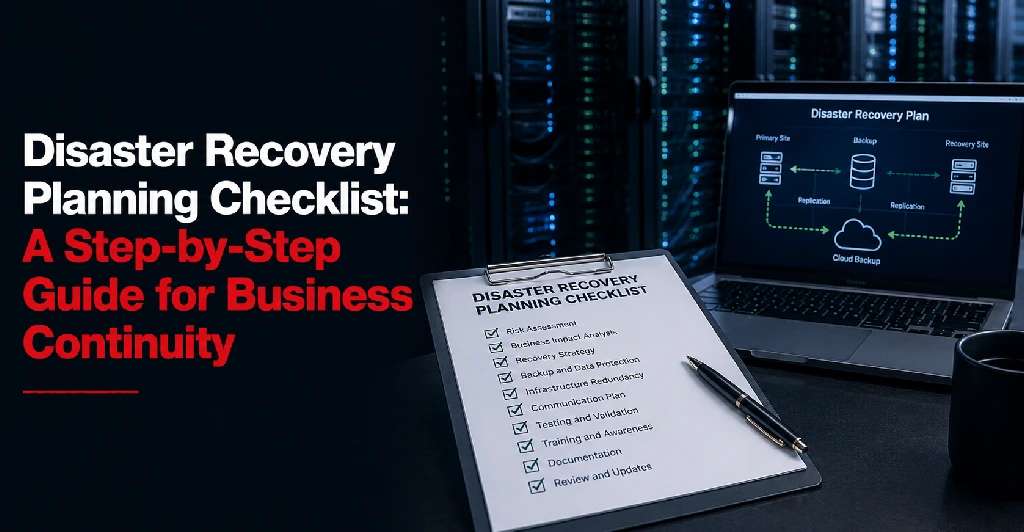
A successful disaster recovery strategy helps organizations restore critical systems quickly and maintain business continuity during unexpected events. Organizations that have not yet developed a formal recovery framework should start with a comprehensive disaster recovery planning checklist to identify gaps and establish recovery priorities.
Avoiding the following mistakes is an important step toward achieving that goal.
Mistake #1: Not Testing the Disaster Recovery Plan
One of the most common and costly mistakes is creating a disaster recovery plan and never testing it.
Many organizations assume that because a recovery plan exists, it will work when needed.
Unfortunately, real-world incidents often reveal:
- Outdated procedures
- Missing information
- Failed backups
- Connectivity issues
- Unclear responsibilities
Why Testing Matters
Testing validates:
- Recovery procedures
- Infrastructure readiness
- Team preparedness
- Recovery objectives
Without testing, organizations are relying on assumptions rather than proven capabilities.
How to Avoid This Mistake
Establish a regular testing schedule that includes:
- Documentation reviews
- Tabletop exercises
- Recovery simulations
- Full failover testing
At a minimum, disaster recovery plans should be reviewed and tested annually. Businesses unsure about testing frequency can review our guide on how often disaster recovery plans should be tested.
Mistake #2: Unclear Recovery Roles and Responsibilities
During a crisis, confusion can significantly delay recovery efforts.
Many organizations fail to clearly define:
- Who leads recovery efforts
- Who communicates with stakeholders
- Who restores systems
- Who coordinates with vendors
When responsibilities are unclear, valuable time is lost.
Common Symptoms
- Duplicate efforts
- Missed recovery tasks
- Delayed decision-making
- Communication breakdowns
How to Avoid This Mistake
Document recovery responsibilities for:
- IT teams
- Executive leadership
- Operations personnel
- Vendors and service providers
Everyone involved should understand their role before an incident occurs.
Mistake #3: Missing or Outdated Documentation
Recovery documentation often becomes outdated as infrastructure evolves.
Organizations may add:
- New applications
- Additional servers
- Cloud services
- Network configurations
Yet recovery procedures remain unchanged.
Risks of Poor Documentation
Missing or inaccurate information can delay:
- System restoration
- Network recovery
- Vendor coordination
- User access restoration
Documentation Should Include
- Recovery procedures
- Contact information
- Escalation paths
- Infrastructure diagrams
- System dependencies
- Vendor contacts
How to Avoid This Mistake
Review and update documentation whenever significant infrastructure changes occur.
Documentation should be treated as a living resource rather than a one-time project.
Mistake #4: Relying on Backups Stored in a Single Location
Many businesses believe they are protected because they maintain backups.
However, backups stored in the same location as production systems may be vulnerable to the same disaster.
Examples include:
- Fires
- Floods
- Ransomware attacks
- Power failures
- Facility outages
Why This Is Dangerous
A single event could affect both production systems and backups simultaneously.
It’s also important to understand that backups alone do not provide full operational recovery. There is a significant difference between backup and disaster recovery, and organizations often confuse the two.
How to Avoid This Mistake
Follow the widely accepted 3-2-1 backup strategy:
- 3 copies of data
- 2 different storage media
- 1 copy stored offsite
Many organizations also utilize a dedicated disaster recovery site and geographically separate facilities for additional protection.
Mistake #5: Ignoring Connectivity Dependencies
Recovery planning often focuses heavily on servers and data while overlooking network connectivity.
Yet restored systems are useless if users cannot access them.
Common Connectivity Issues
- Carrier outages
- Network equipment failures
- Lack of failover connectivity
- Single-provider dependence
Recovery Requires Connectivity
Organizations must consider:
- Internet connectivity
- WAN connections
- Cloud access
- Remote employee access
- Data center connectivity
How to Avoid This Mistake
Implement:
- Carrier diversity
- Redundant network paths
- Automatic failover
- Connectivity testing
Connectivity should be considered a core component of disaster recovery planning.
Mistake #6: Poor Communication Planning
Technology recovery is only one part of disaster response.
Communication failures can create confusion, delays, and unnecessary disruption.
Questions Organizations Often Forget to Answer
- Who communicates with employees?
- Who updates customers?
- How will vendors be contacted?
- What happens if email is unavailable?
Consequences of Poor Communication
- Confusion among stakeholders
- Delayed response efforts
- Reduced customer confidence
- Operational inefficiencies
How to Avoid This Mistake
Develop a documented communication plan that includes:
- Key contacts
- Escalation procedures
- Notification channels
- Alternative communication methods
Communication planning should be integrated into the broader recovery strategy.
Mistake #7: Failing to Define Recovery Objectives
Many organizations develop recovery plans without establishing clear recovery targets.
Without measurable objectives, it’s impossible to determine whether recovery efforts are successful.
Recovery Time Objective (RTO)
Recovery Time Objective (RTO) defines how quickly systems must be restored.
Examples:
- 1 hour
- 4 hours
- 24 hours
Recovery Point Objective (RPO)
RPO defines how much data loss is acceptable.
Examples:
- Zero data loss
- 15 minutes
- One hour
Why Objectives Matter
Recovery objectives influence:
- Infrastructure design
- Backup frequency
- Disaster recovery investments
- Testing requirements
How to Avoid This Mistake
Work with business stakeholders to establish realistic recovery goals for every critical system.
Recovery plans should be designed around those objectives.
Summary: The 7 Disaster Recovery Mistakes
| Mistake | Potential Impact |
| No Testing | Recovery procedures may fail when needed |
| Unclear Recovery Roles | Delayed response and confusion |
| Missing Documentation | Slower recovery efforts |
| Single Location Backups | Increased risk of total data loss |
| Ignoring Connectivity | Systems restored but inaccessible |
| Poor Communication Plans | Stakeholder confusion and delays |
| No Recovery Objectives | Unclear recovery expectations |
How to Build a More Effective Disaster Recovery Strategy
Organizations can reduce downtime risk by:
– Testing Regularly
Validate recovery capabilities through scheduled testing.
– Maintaining Current Documentation
Keep recovery procedures aligned with infrastructure changes.
– Protecting Data Across Multiple Locations
Implement offsite backups and disaster recovery environments.
– Building Connectivity Resilience
Use redundant carriers and network paths.
– Establishing Clear Recovery Objectives
Define measurable RTOs and RPOs.
– Creating Strong Communication Plans
Ensure stakeholders receive timely and accurate information during incidents.
– Reviewing Plans Continuously
Recovery planning should evolve alongside the business.
Organizations seeking a more comprehensive solution may also benefit from professional disaster recovery services that support recovery planning, infrastructure resilience, and ongoing testing.
Final Thoughts
Most disaster recovery failures do not occur because organizations lack a plan.
They occur because the plan contains weaknesses that were never identified before a real disaster happened.
By avoiding these seven common disaster recovery mistakes, organizations can significantly improve recovery readiness, reduce downtime, and strengthen overall business continuity.
The most successful disaster recovery strategies combine technology, people, processes, and ongoing testing to ensure that when disruption occurs, recovery is predictable, efficient, and effective.
In today’s always-connected business environment, preparation is no longer optional. The organizations that recover fastest are the ones that plan, test, and improve before disaster strikes.
If you’d like to learn more about building a resilient recovery strategy, explore Sierra Data Centers’ data center solutions or contact our team to discuss your disaster recovery requirements.