When businesses place servers, network equipment, or infrastructure inside a data center, they may not always have their own IT staff physically available at the facility. This is where remote hands support becomes important.
Remote hands support allows a data center team to perform basic physical tasks on behalf of the customer. These tasks may include checking equipment, rebooting servers, verifying cables, replacing hardware, labeling devices, or assisting with troubleshooting.
For businesses using colocation, private racks, private cages, or data center hosting environments, remote hands support can reduce delays, minimize travel, and help resolve infrastructure issues more quickly.
In simple terms, remote hands support gives your business access to on-site technical assistance when your own team cannot be there.
What Does Remote Hands Mean in a Data Center?
Remote hands refers to on-site support provided by data center staff for customer-owned or customer-managed equipment.
The customer usually gives instructions remotely, and the data center technician performs the requested physical task inside the facility.
For example, if a server stops responding and your IT team suspects a physical issue, the data center technician may be able to inspect the server, confirm whether it has power, check network connections, or perform a controlled reboot.
Remote hands does not usually mean that the data center team fully manages your IT environment. Instead, it means they can assist with physical, facility-level, or basic technical tasks when needed.
This service is especially useful for businesses that do not have technical staff near the data center location.
Why Remote Hands Support Matters
Remote hands support matters because infrastructure problems often need quick physical attention.
Even with strong monitoring tools and remote management systems, some issues require someone to physically inspect or interact with equipment. A cable may be loose. A server may need to be power cycled. A failed drive may need to be replaced. A firewall may need a console cable connection. A device may need visual inspection.
Without remote hands support, your internal team may need to travel to the facility for even minor tasks. That can delay resolution and increase downtime.
Remote hands support helps businesses:
- Respond faster to physical infrastructure issues
- Reduce the need for emergency travel
- Support equipment outside office hours
- Handle basic troubleshooting more efficiently
- Maintain infrastructure in remote or regional facilities
- Support lean internal IT teams
- Improve colocation operations
For businesses that rely on critical infrastructure, having trusted on-site support can make a major difference.
Common Remote Hands Services
Remote hands services vary by data center provider, but they often include several common types of support.
These may include:
- Server reboot assistance
- Power cycling equipment
- Checking indicator lights
- Verifying device status
- Connecting or disconnecting cables
- Cable tracing and labeling
- Installing or removing patch cables
- Rack and stack assistance
- Hardware inspection
- Drive replacement support
- Basic troubleshooting
- Console access setup
- Equipment inventory verification
- Shipping and receiving support
- Visual inspection of racks or cabinets
- Escorting approved vendors inside the facility
The exact scope depends on the provider and the customer agreement. Some providers offer only basic remote hands tasks, while others may offer more advanced technical support.
Remote Hands vs Smart Hands
Some data centers use the terms remote hands and smart hands differently.
Remote hands usually refer to basic physical tasks performed under customer direction. These tasks are often simple, procedural, and do not require deep system knowledge.
Smart hands may refer to more advanced technical work. This can include deeper troubleshooting, hardware replacement, network configuration assistance, operating system support, or vendor-guided repairs.
The difference is not always the same across every provider. Some facilities use one term for both services. Others separate them based on complexity, technician skill level, response time, or billing structure.
Before choosing a data center provider, businesses should ask what is included in remote hands support and what requires advanced support or additional fees.
When Businesses Need Remote Hands Support
Remote hands support is useful in many situations.
A business may need remote hands when:
- A server becomes unresponsive
- Equipment needs to be rebooted
- A network cable needs to be checked
- A device needs to be inspected
- A new cable needs to be installed
- A failed component needs to be replaced
- A vendor needs escorted access
- A firewall or switch needs console access
- Equipment needs to be moved within a rack
- Hardware needs to be received or shipped
- An internal IT team is not near the facility
- An issue happens after normal business hours
Remote hands support becomes even more important when the data center is located in another city or region from the company’s main IT team.
For multi-location businesses, remote hands can help maintain infrastructure without requiring staff to travel every time physical support is needed.
Remote Hands for Colocation Customers
Remote hands support is especially important forcolocation customers.
In a colocation model, the business usually owns or controls its own servers and network equipment. The data center provides the facility environment, including power, cooling, physical security, rack space, and connectivity.
Because the customer is responsible for the equipment, physical access may sometimes be needed. Remote hands support bridges the gap between customer control and on-site availability.
For colocation customers, remote hands can help with:
- Server reboots
- Cable checks
- Equipment installation support
- Hardware swaps
- Rack organization
- Connectivity troubleshooting
- Vendor coordination
- Emergency response
This makes colocation more practical for businesses that want control over their infrastructure but do not want to send staff to the facility for every physical task.
Remote Hands for Private Cages and Suites
Businesses usingprivate cages and suites often have larger or more sensitive infrastructure environments.
These environments may support enterprise workloads, regulated data, healthcare systems, financial platforms, manufacturing operations, or multi-site networks.
Remote hands support can help these businesses maintain their private infrastructure more efficiently.
For private cage and suite environments, support may include:
- Controlled access assistance
- Equipment checks
- Rack-level troubleshooting
- Cable management support
- Vendor escorting
- Hardware receiving
- Basic installation tasks
- Emergency response assistance
Since private environments often require stricter access controls, it is important to understand how remote hands requests are authorized, documented, and completed.
How Remote Hands Support Reduces Downtime
Remote hands support can reduce downtime by shortening the time between identifying a problem and taking physical action.
For example, if monitoring shows that a server is unreachable, your IT team may not immediately know whether the issue is related to power, network, hardware, or software. A remote hands technician can check the equipment directly and report what they see.
This can help your team determine the next step more quickly.
Remote hands can also help when a simple physical action resolves the issue. A technician may be able to reseat a cable, confirm power, replace a failed drive, or perform a controlled reboot.
Without on-site support, the business may lose valuable time waiting for someone to travel to the facility.
How Remote Hands Supports Business Continuity
Business continuity depends on keeping important systems available and recoverable.
Remote hands support contributes to business continuity by giving companies access to physical infrastructure assistance when needed. This is especially helpful during outages, hardware failures, maintenance windows, migrations, and disaster recovery events.
For businesses with critical systems, remote hands can support:
- Faster response to incidents
- Better after-hours support
- Reduced travel dependency
- Improved maintenance execution
- More reliabledisaster recovery operations
- Smoother infrastructure changes
- Faster hardware replacement
Remote hands should be considered part of the broader infrastructure support strategy, especially for companies that depend on uptime.
What Remote Hands Support Usually Does Not Include
Remote hands support has limits.
Basic remote hands may not include:
- Full server administration
- Operating system troubleshooting
- Application support
- Database repair
- Security incident response
- Complex firewall configuration
- Cloud management
- Software patching
- Backup management
- Strategic IT consulting
These tasks may require a managed IT provider, internal IT team, cloud engineer, cybersecurity team, or advanced support agreement.
Businesses should clarify expectations before signing a data center agreement. It is important to know what the provider will do, what they will not do, and what may require additional support.
What to Ask a Data Center Provider About Remote Hands
Before choosing a data center provider, ask detailed questions about remote hands support.
Important questions include:
- Is remote hands support available 24/7?
- What tasks are included?
- What tasks are considered advanced support?
- How are requests submitted?
- What are the response times?
- Are remote hands services included or billed separately?
- Is there a minimum billing time?
- How are emergency requests handled?
- Who is authorized to request support?
- Are completed tasks documented?
- Can technicians provide photos or status updates?
- Can remote hands assist with migrations?
- Can staff escort vendors or hardware providers?
- What security controls apply to customer equipment?
These questions help businesses understand the real level of support available after the infrastructure is installed. Knowing what to ask overlaps significantly with generalquestions to ask before signing with a data center to guarantee all bases are covered.
Remote Hands and Security
Security is an important part of remote hands support.
Because data center staff may physically interact with customer equipment, there should be clear authorization and documentation procedures.
Businesses should ask how the provider handles:
- Authorized contact lists
- Request verification
- Access logs
- Work documentation
- Visitor and vendor escorting
- Cabinet, cage, or suite access
- Chain of custody for hardware
- Photo documentation
- Emergency access procedures
Remote hands support should make infrastructure easier to operate without weakening security controls.
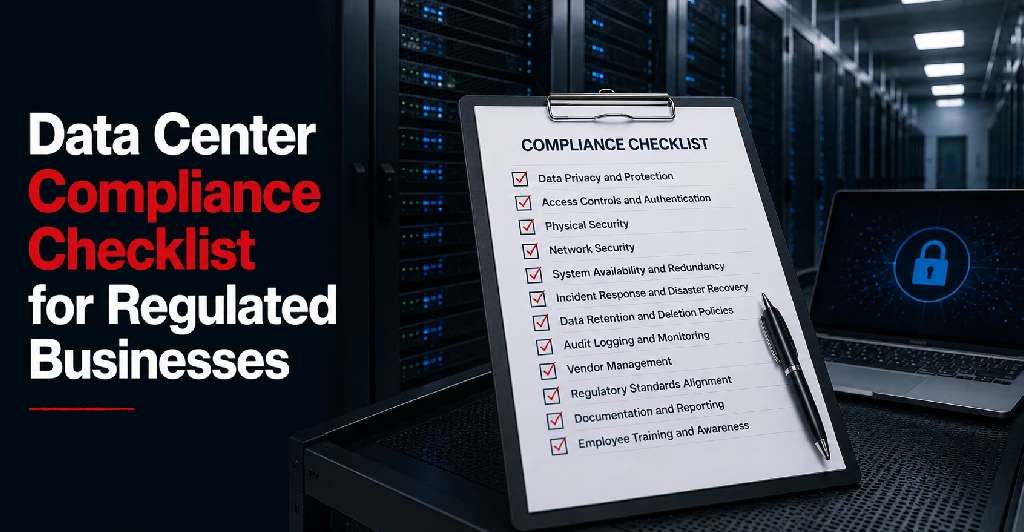
For regulated industries such as healthcare, financial services, and enterprise IT, this documentation may be especially important.
Remote Hands During Data Center Migration
Remote hands support can also help during migration into a colocation facility.
During migration, remote hands may assist with:
- Receiving equipment
- Confirming rack space
- Helping with installation
- Verifying cable connections
- Checking power status
- Supporting first boot
- Escorting vendors
- Confirming equipment placement
- Assisting with post-migration troubleshooting
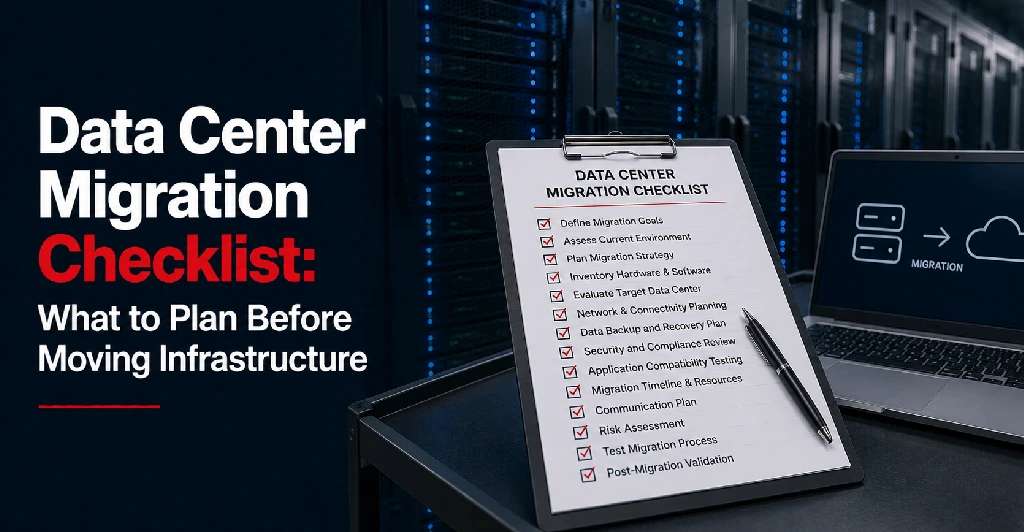
This can make the migration process smoother, especially when internal IT staff cannot remain on-site for every stage of the move. Following a thoroughdata center migration checklist ensures tasks allocated to remote hands align perfectly with the broader migration schedule.
Remote hands should be discussed before the migration begins, not after issues arise.
Remote Hands for Growing Businesses
Remote hands support is valuable for growing businesses because infrastructure needs often become more complex over time.
A small business may begin with a few servers in a shared rack. As it grows, it may need additional rack space, private cabinets, private cages, stronger connectivity, or disaster recovery infrastructure.
Remote hands support can help the business manage this growth more efficiently.
It gives internal teams more flexibility by reducing the need for constant physical access. It also allows businesses to work with regional data centers while still maintaining operational control.
Benefits of Remote Hands Support
Remote hands support can provide several practical benefits:
- Faster response to physical infrastructure issues
- Reduced travel time for internal IT teams
- Better support for remote or regional infrastructure
- Improved uptime and maintenance efficiency
- Easier colocation management
- More support during migrations
- Better after-hours response
- Stronger business continuity planning
- More practical support for lean IT teams
For many businesses, remote hands support is not just a convenience. It is a key part of making colocation anddata center hosting more manageable.
Remote Hands Support Checklist
When evaluating remote hands support, businesses should confirm:
- Support availability
- Included services
- Excluded services
- Response time expectations
- Emergency support process
- Billing structure
- Authorized contact process
- Documentation standards
- Security controls
- Vendor escort options
- Migration support
- Hardware handling process
- After-hours availability
- Communication process
- Escalation process
Is Remote Hands Support Right for Your Business?
Remote hands support is especially useful if your business:
- Uses colocation infrastructure
- Has servers in a facility away from your main office
- Has limited internal IT staff
- Needs after-hours infrastructure support
- Wants to reduce travel for technical tasks
- Runs critical applications on physical hardware
- Uses private racks, cages, or suites
- Needs support during migration or maintenance
- Wants better business continuity
If your infrastructure is important to daily operations, remote hands support can help reduce operational risk.
Work With a Data Center Provider That Supports Your Infrastructure
Remote hands support makes data center infrastructure easier to manage, especially for businesses that need reliability without sending staff on-site for every issue.
The right provider should offer clear support processes, strong security controls, responsive communication, and practical assistance when physical tasks are needed. Learninghow to choose a data center provider helps align these service features with long-term company standards.
Remote Hands Support at Sierra Data Centers
Sierra Data Centers supports businesses with secure colocation, data center hosting, private infrastructure options,connectivity solutions, and disaster recovery planning across its professionaldata centers.
Sierra Data Centers offers remote hands in three subscription levels (reboots, console connection with tasks you direct, and troubleshoot-and-resolve), billed Time & Materials or in monthly blocks of 5 to 100 incidents.
For organizations moving infrastructure into a professional data center environment, remote hands support can help reduce delays, simplify maintenance, and improve response when physical assistance is needed.
Whether your business is using colocation, private rack space, private cages, or hosting infrastructure, you cancontact us at Sierra Data Centers to help you evaluate your support needs and plan a more reliable operating environment.