
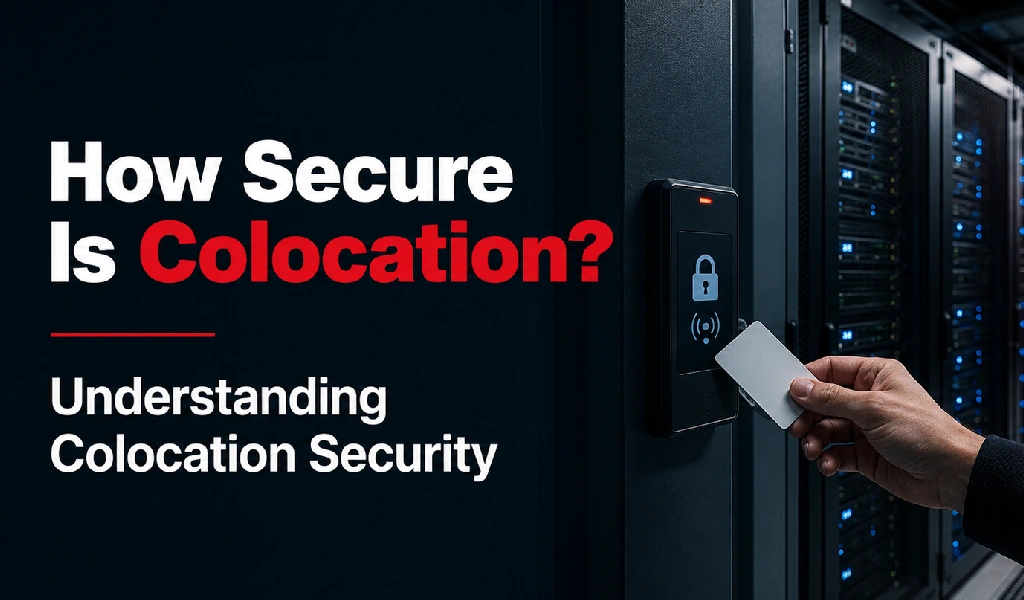
When businesses consider moving their infrastructure to a colocation facility, one question often comes up first:
How secure is colocation?
It’s a valid concern. Your servers may contain customer information, financial records, intellectual property, healthcare data, or other critical business systems. Protecting that infrastructure is essential.
The good news is that modern colocation facilities are designed with security as a core priority. In many cases, they offer significantly stronger protection than a typical office server room or on-premise environment.
Let’s take a closer look at the physical, operational, and environmental safeguards that make colocation one of the most secure infrastructure options available.
Why Colocation Security Matters
Cybersecurity often receives most of the attention, but physical security is equally important.
Even the most advanced firewall cannot protect a server that is physically stolen, damaged, or accessed by unauthorized individuals.
A secure colocation environment helps protect against:
- Unauthorized physical access
- Theft and vandalism
- Infrastructure tampering
- Power disruptions
- Environmental hazards
- Natural disasters
- Operational downtime
For organizations evaluating infrastructure options, understanding what colocation is and how it works provides important context about how professional data centers protect customer equipment.
Physical Security Measures
Professional colocation facilities are purpose-built to protect critical infrastructure.
Unlike standard office buildings, data centers are designed with multiple layers of physical security.
Secure Facility Design
Many facilities incorporate:
- Reinforced building construction
- Limited entry points
- Controlled visitor access
- Security checkpoints
- Perimeter protection
Security begins before someone even reaches the data hall.
Locked Cabinets and Cages
Most colocation deployments are housed within:
- Lockable cabinets
- Dedicated racks
- Private cages
- Secure suites
These additional layers help prevent unauthorized access to equipment.
Restricted Access Areas
Data centers typically separate access to:
- Network rooms
- Mechanical systems
- Power infrastructure
- Customer equipment areas
Only authorized personnel can enter sensitive locations.
Access Controls
One of the biggest differences between colocation facilities and office environments is the level of access management.
Multi-Layer Authentication
Many data centers require multiple forms of verification before granting entry.
Examples include:
- Keycards
- Access badges
- PIN codes
- Biometric authentication
Access is often granted only to approved individuals designated by the customer.
Visitor Management
Professional facilities maintain strict visitor procedures.
Visitors may be required to:
- Register in advance
- Present identification
- Sign access logs
- Be escorted by authorized personnel
These procedures create accountability and reduce security risks.
Role-Based Access
Some organizations choose to limit facility access to specific employees or IT administrators.
This ensures only those who require physical access can reach critical infrastructure.
Monitoring and Surveillance
Security does not stop at the door.
Most colocation facilities operate under continuous monitoring.
24/7 Security Operations
Data centers commonly maintain:
- Around-the-clock monitoring
- Security personnel
- Incident response procedures
- Access logging systems
This helps identify and address issues quickly.
Video Surveillance
Surveillance systems are often deployed throughout the facility, including:
- Building entrances
- Loading areas
- Hallways
- Data halls
- Customer access points
Recorded footage provides an additional layer of protection and accountability.
Audit Trails
Many facilities maintain detailed logs of:
- Access attempts
- Entry events
- Visitor activity
- Security incidents
These records can support compliance requirements and security investigations.
Compliance Considerations
For organizations in regulated industries, infrastructure security is often tied directly to compliance obligations.
Healthcare Organizations
Healthcare providers frequently need infrastructure capable of supporting HIPAA-related requirements.
Financial Services
Banks, credit unions, and financial firms often require enhanced security controls to support regulatory standards.
Manufacturing and Enterprise Organizations
Many businesses must demonstrate secure handling of operational and customer data as part of internal governance policies.
Security Certifications
When evaluating providers, look for facilities that maintain recognized certifications and audit programs, such as:
- SOC audits
- PCI-related infrastructure controls
- HIPAA-supporting environments
- Industry-specific compliance standards
While certifications do not guarantee security, they demonstrate commitment to operational best practices.
Environmental Controls
Security is not just about preventing unauthorized access.
Protecting infrastructure from environmental threats is equally important.
Redundant Power Systems
Power failures are among the most common causes of downtime.
Professional colocation facilities often include:
- Dual power feeds
- Uninterruptible Power Supplies (UPS)
- Backup generators
- Fuel reserves
These systems help maintain operations during utility disruptions.
Advanced Cooling Systems
Servers generate substantial heat.
Without proper cooling, equipment performance and reliability can suffer.
Data centers typically utilize:
- Redundant cooling systems
- Environmental monitoring
- Temperature controls
- Airflow management
This helps protect equipment from overheating.
Fire Detection and Suppression
Modern facilities often include:
- Early fire detection systems
- Smoke monitoring
- Fire suppression technologies
- Compartmentalized infrastructure areas
These systems help minimize risk while protecting critical equipment.
Environmental Monitoring
Facilities continuously monitor:
- Temperature
- Humidity
- Air quality
- Power conditions
This proactive approach helps identify issues before they become outages.
Is Colocation More Secure Than On-Premise Infrastructure?
For most organizations, the answer is yes.
While some enterprises operate highly secure private facilities, most businesses cannot justify the cost of building enterprise-grade infrastructure internally.
A typical office server room often lacks:
- 24/7 monitoring
- Biometric access controls
- Redundant power systems
- Advanced cooling infrastructure
- Dedicated security personnel
Colocation facilities are specifically designed to address these challenges.
As a result, businesses often improve both security and operational resilience when moving infrastructure to a professional data center.
RELATED: Colocation vs on-premise infrastructure
Questions to Ask a Colocation Provider
Not all data centers offer the same level of protection.
Before selecting a provider, ask questions such as:
Physical Security
- What physical security measures are in place?
- Are cabinets, cages, or suites available?
- Is the facility staffed around the clock?
Access Management
- How is customer access controlled?
- Are biometric systems used?
- How are visitors managed?
Surveillance
- Is the facility monitored 24/7?
- How long is surveillance footage retained?
- Are access logs available upon request?
Compliance
- Which certifications and audits does the facility maintain?
- How does the facility support compliance requirements?
Environmental Protection
- What redundancy exists for power and cooling?
- What fire suppression systems are installed?
- How is environmental monitoring handled?
The answers to these questions can reveal a great deal about the overall quality of a colocation provider.
Businesses should also understand what to look for in a colocation provider to evaluate security, reliability, and operational standards before making a decision.
Final Thoughts
Security is one of the primary reasons organizations choose colocation.
Professional data centers provide multiple layers of protection through physical security, controlled access, continuous monitoring, compliance-focused operations, and resilient infrastructure.
For businesses that rely on critical applications and sensitive data, colocation often delivers a level of security that is difficult and expensive to achieve within a traditional office environment.
Organizations looking for dedicated infrastructure solutions can explore Sierra Data Centers and their colocation services for secure hosting options.
When evaluating providers, don’t focus solely on price or rack space. Understanding a facility’s security practices is just as important. The right colocation partner should help protect not only your infrastructure, but also your business continuity, compliance posture, and long-term operational success.
If you want to discuss your infrastructure security requirements, you can contact Sierra Data Centers for more information.